304 vs 316 Stainless Steel Wire Mesh: A Buyer's Guide for Stainless Steel Wire Mesh Supplier Applications Near Duluth, MN
Choosing the right stainless steel grade for wire mesh is something every industrial buyer near Duluth, MN, eventually has to work through. The Duluth area sits at the intersection of Great Lakes shipping, Iron Range mining, food processing, and chemical handling, which means the grade you pick directly affects how long your screens last. This guide breaks down the key differences so you can make a confident decision when working with a stainless steel wire mesh supplier serving the region.
Understanding the Two Grades: What Makes 304 and 316 Different
Both grades perform well across a wide range of industrial settings. The core difference comes down to one element: molybdenum. Grade 304 is composed of 18% chromium and 8% nickel. Grade 316 contains similar chromium and nickel levels but adds 2% to 3% molybdenum, making it more resistant to pitting, crevice corrosion, and chloride attack.
Both grades form a protective oxide layer on the surface. In mild environments, that layer holds up fine in either grade. In environments with chlorides, salts, or harsh chemicals, that layer can break down in 304. The molybdenum in 316 stabilizes it against that kind of attack. Both grades can be welded and fabricated, and they look nearly identical to the naked eye. The differences only show up in performance over time.
Corrosion Resistance, Temperature Tolerance, and Mesh Specifications
Corrosion resistance is the most important factor for most buyers in this region. Grade 304 handles atmospheric conditions, mild acids, and alkaline solutions well but is less resistant to chloride corrosion. Grade 316 performs better in environments involving chlorides, saltwater, de-icing salts, and chemical processing streams. For operations near the Port of Duluth-Superior, where salt, coal dust, and taconite handling are common, 316 may offer a more durable fit.
Temperature tolerance is another consideration. Both grades perform well under heat, but 316 tends to hold up better under high-temperature oxidation conditions due to its molybdenum content.
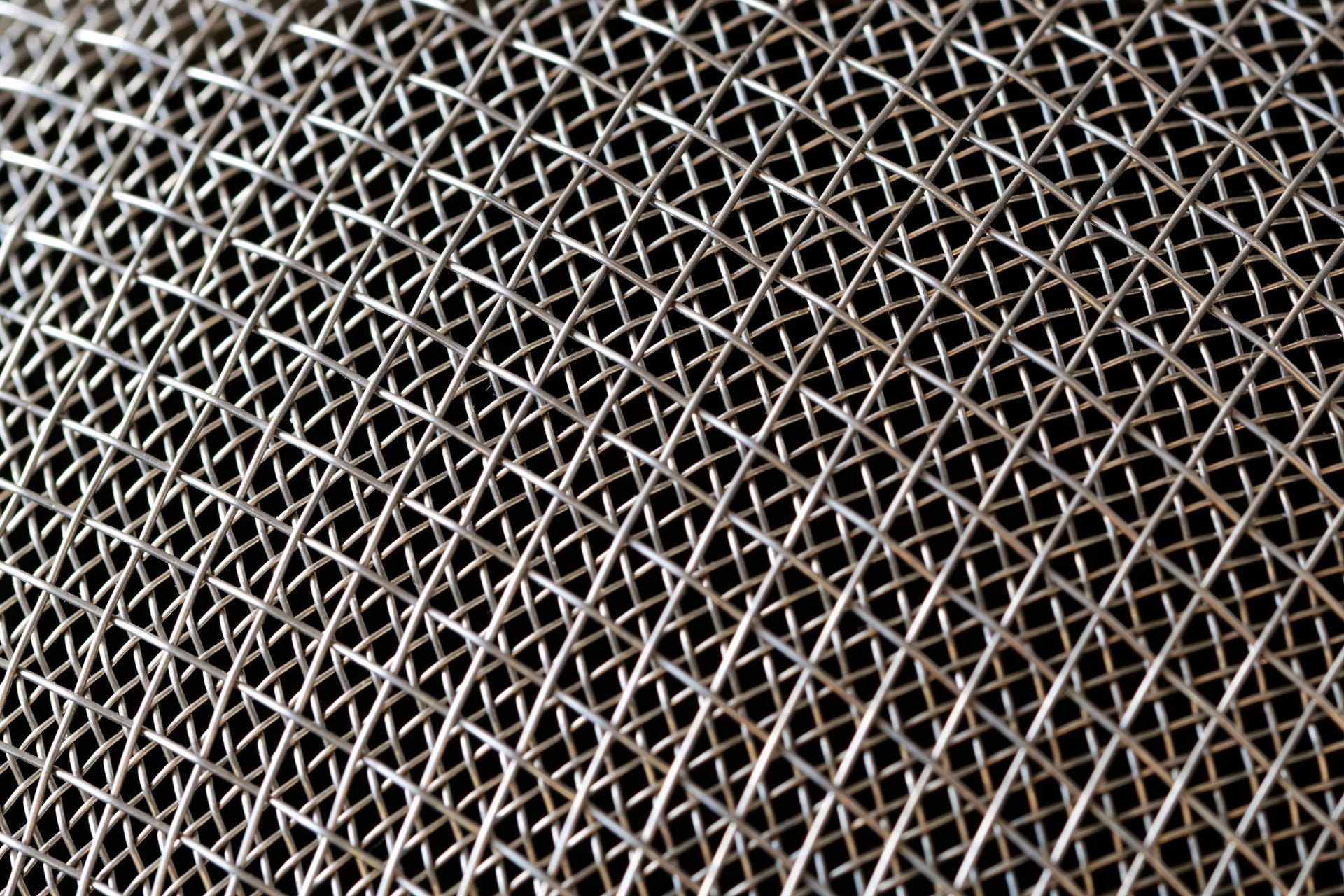
Mesh count and wire diameter affect how these grades perform in practice. Mesh count refers to the number of openings per linear inch. Higher mesh counts mean finer openings and thinner wire. Thinner wire in a corrosive environment degrades faster, which makes the corrosion advantage of 316 more significant in fine-mesh applications. Coarser meshes with heavier wire diameters may tolerate 304 longer before showing wear.
When 304 Is Often the Right Choice
Grade 304 works well for dry aggregate screening, grain handling and milling, architectural uses, and food processing environments where chemical exposure is low. It is widely available and typically the more economical of the two grades. Any reputable stainless steel wire mesh supplier will carry 304 in a broad range of mesh counts and wire diameters for these applications.
When 316 May Be the Better Investment
Grade 316 tends to be the better option in more aggressive environments. Marine applications near Lake Superior, chemical processing facilities, operations involving brine or chlorinated cleaning agents, and outdoor installations exposed to de-icing salts are all situations where 316's added corrosion resistance can reduce replacement cycles and downtime. Operations connected to the Duluth-Superior port or processing facilities along the St. Louis River corridor may also benefit from the stronger protection 316 offers.
Thinking in Replacement Cycles, Not Just Price Per Sheet
316 carries a higher unit price than 304, and that gap can vary with nickel and molybdenum market conditions. The smarter way to evaluate the cost difference is in total replacement cycles. The mesh itself is often the less expensive part of a screen maintenance job compared to labor, equipment downtime, and the shutdown needed to swap it out.
In a demanding environment, 304 may fail faster, meaning more frequent replacements and more downtime. In that scenario, the higher upfront cost of 316 may deliver better long-term value. In a mild environment, choosing 316 when 304 would do the job adds cost without a real performance benefit.
A Simple Decision Framework
Ask these questions before placing your order:
- Does your application involve chlorides, saltwater, brine, or chemical cleaning agents? If yes, consider 316.
- Is your mesh fine (higher mesh count, thinner wire) in a corrosive environment? If yes, 316 may last significantly longer.
- Will the mesh be welded into a frame or assembly in corrosive service? If yes, ask specifically about 316L, the low-carbon version, which resists weld-zone corrosion.
- Is your application dry, low-chemical, and moderate in exposure? If yes, 304 is often a cost-effective fit.
- What is the cost of downtime if your screens fail early? If downtime is expensive, factor that into the grade decision.
Making the Right Call for Your Duluth-Area Operation
Duluth, MN, and the surrounding region support some of the most demanding industrial applications in the Upper Midwest, from taconite handling and port operations to food processing and chemical facilities. Getting the grade right the first time reduces unplanned maintenance and extends screen life.
Whether you need 304 for a dry screening operation or 316 for a chemical-exposed filtration system, review the product range available to understand which configurations, weave styles, and wire diameters are in stock for your application.
Connect With a Trusted Supplier Serving Duluth, MN
Industrial Screen Supply, Inc. supplies stainless steel wire mesh in grades 304, 316, and 321 to industries across the Duluth, MN, area, including mining, food processing, agriculture, and chemical operations. As a full-service stainless steel wire mesh supplier, the company offers same-day service on many products and has a team ready to match grade, mesh count, and wire diameter to your exact application.
Call 651-699-3715 or toll-free at 800-653-4459 to speak with a screening specialist, or contact the team directly to request a quote.